How to Choose M8/M12 Connector Termination Methods & Mounting Types
Technical Guide to M-Series Circular Connector Termination & Mounting
In industrial automation, the termination and mounting methods of M-series connectors (e.g., M8, M12) directly determine signal integrity and environmental protection ratings (IP67/IP69K).
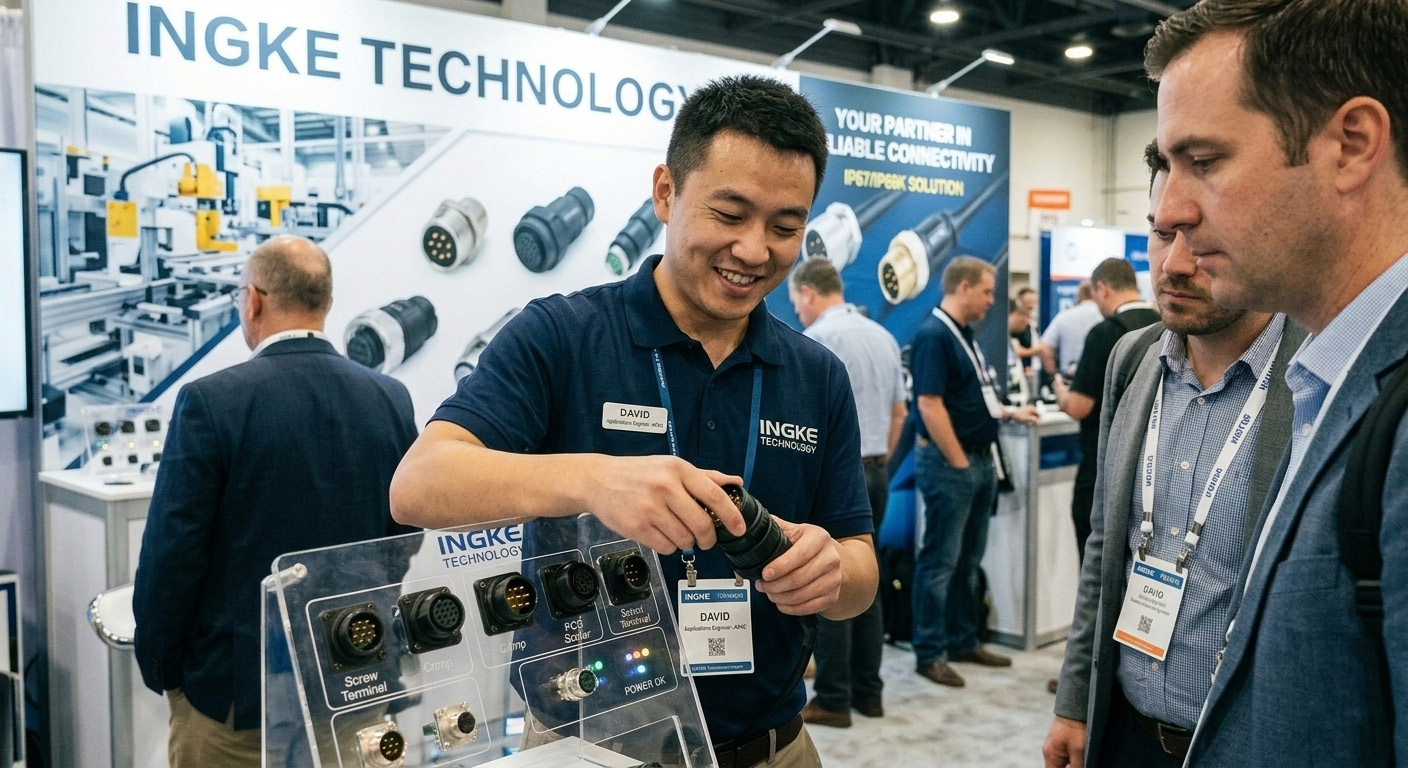
1. Four Major Termination Methods
-
Crimp: Uses mechanical force to deform the terminal around the wire. It offers the highest vibration resistance and electrical consistency. Ideal for high-vibration robotics and mass production, though it requires specialized tools and is non-reworkable.
-
Screw: Secures the wire using a micro screw. It requires no special tooling and allows easy disassembly, making it the top choice for field assembly, maintenance, and prototyping.
-
Solder: Melts solder to join the wire and the contact cup. It provides lowest contact resistance and excellent sealing. Ideal for high-pin-count or miniaturized M5/M8 connectors, but requires high operator skill.
-
Push-in (Spring): Solid wires or ferruled stranded wires insert directly and lock automatically via internal springs. It cuts wiring time significantly and resists vibration, but carries a higher component cost.
2. Receptacle Mounting Types
-
Front vs. Rear Fastening: Front-mount types insert from the outside and lock externally for easy maintenance. Rear-mount types insert from the inside, keeping the waterproof O-ring protected within the housing for better aesthetics and corrosion resistance.
-
PCB Solder: Features straight or 90° right-angle pins that solder directly onto the circuit board. This eliminates internal wiring and maximizes space efficiency inside compact devices.
-
Pigtail (Pre-wired): Supplied with a factory-molded cable of specific length. It guarantees excellent root-level waterproofing and simplifies final device assembly.
3. Critical Installation Practices for IP67/IP69K Protection
-
Anti-Rotation Cutouts: Panel holes must be precise. A D-hole design is typically required to lock the connector body in place, preventing it from spinning and twisting internal wires during mating.
-
Torque Control: A torque wrench is mandatory. Under-tightening fails to compress the O-ring, while over-tightening cracks the housing or deforms the seal (e.g., standard M12 metal nuts require 1.5 - 2.0 N·m).
-
Strain Relief & Drip Loops: Cables must maintain a bending radius of 5 to 10 times the cable diameter. For outdoor setups, shape the cable into a drip loop so gravity pulls moisture away from the connector entry point.
4. Selection Matrix
-
High Vibration & Mass Production (Robots, Machine Tools): Choose Crimp + Pre-molded Cable.
-
Field Wiring & Field Upgrades (On-site Engineering): Choose Screw / Push-in Field Assembly Connector.
-
Tight Space & High Integration (Compact Gateways): Choose PCB Right-Angle Solder + Rear Mount.