M-Series M12 Connector Coding Guide: A, B, D, X, L-Code Differences
Deep Dive into M-Series Circular Connector Coding Systems: Hardcore Mis-mating Prevention and Protocol Standardization for Industrial IoT and Automation
In industrial automation, fieldbus communication, and Industrial Internet of Things (IIoT) architectures, M-series circular connectors (such as M8, M12, M16, and M23) serve as the backbone of physical layer connectivity. They handle high-frequency data, complex control signals, and high-power electrical distribution. In harsh factory environments filled with dense equipment integrations, how do we prevent accidental cross-plugging that could destroy sensitive circuitry? How do Gigabit Ethernet, Profibus, and AC/DC power coexist safely within identical shell sizes? The answer lies in the Coding System.
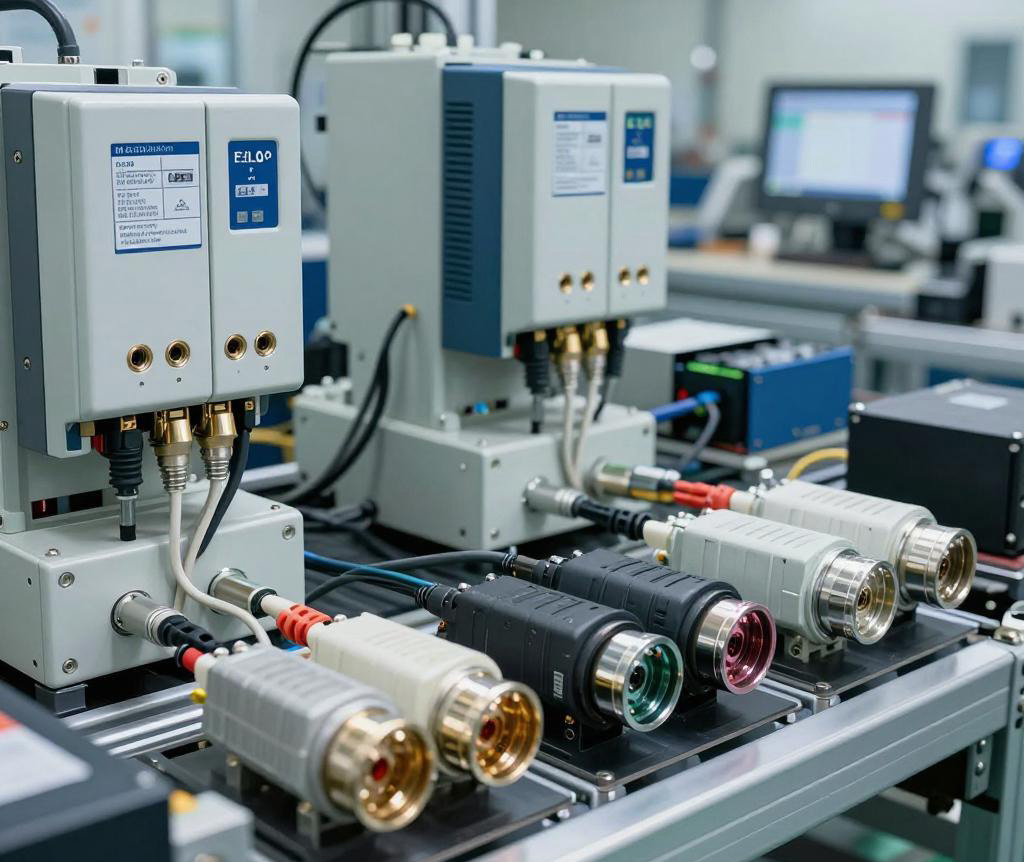
1. Core Mechanics of Coding: Anti-Mismatch Keying and Electrical Boundary Definition
The coding of M-series connectors refers to the intentional differentiation of the internal insulator (core plastic insert) geometries, keyways, and pin arrangements [IEC 61076-2-101]. This design strictly follows international standards like IEC 61076-2-101 to ensure global interoperability [IEC 61076-2-101].
The coding system provides two indispensable engineering benefits:
-
Absolute Physical Mis-mating Prevention (Poka-Yoke): Even if two connectors share the exact same outer thread size (e.g., standard M12), different codes will physically block the male and female ends from mating. This entirely eliminates human error, such as plugging a high-voltage power line into a sensitive low-voltage sensor port.
-
Electrical Property Standardization: Each code directly dictates the pin count (ranging from 3 to 17 pins), rated voltage (from 30V to 630V), and rated current (from 1.5A to 16A). Consequently, it standardizes the physical layer boundaries for various industrial protocols.
2. Mainstream Coding Types and Their Industrial Use Cases
According to global component standards, M12 and M8 connectors feature over ten distinct coding variations, each designated by a specific letter. Below are the most critical codes dominating modern industrial landscapes:
Sensor, Actuator, and General Control Coding
-
A-Coding (A-Code)
-
Mechanical Profile: The classic single-keyway geometry, supporting 3, 4, 5, 8, 12, or 17 pins.
-
Applications: The most ubiquitous code in automation. It is the gold standard for standard DC 24V sensors, actuators, IO-Link modules, and basic signal interfaces.
-
B-Coding (B-Code)
-
Mechanical Profile: Features a reversed keyway arrangement (inverted relative to A-Code).
-
Applications: Exclusively dedicated to Fieldbus architectures [jetharness.com]. It is most commonly used for network cabling in Profibus and Interbus networks to ensure bus lines are never confused with sensor cables [jetharness.com].
Industrial Ethernet & High-Speed Data Coding
-
D-Coding (D-Code)
-
Mechanical Profile: Standard 4-pin arrangement optimized for transmission speeds up to 100 Mbps.
-
Applications: The historical cornerstone of Industrial Ethernet. It perfectly matches real-time Ethernet protocols like Profinet (Type B/C), EtherCAT, and Ethernet/IP [Profinet].
-
X-Coding (X-Code)
-
Mechanical Profile: An 8-pin layout featuring an internal cruciform (X-shaped) metal shield that isolates four twisted pairs. This delivers maximum electromagnetic interference (EMI) protection.
-
Applications: Specifically engineered for 10 Gbps (Cat6A) high-speed Industrial Ethernet. It is mandatory for high-resolution industrial vision cameras, high-frequency data logging, and modern smart factory backbone networks.
Heavy-Duty and Drive Power Coding
As control cabinets shrink, classic heavy-duty rectangular connectors are increasingly being replaced by high-power M-series variants:
-
S-Coding / T-Coding: S-Code handles AC Power supply up to 630V/12A. T-Code handles DC Power supply up to 63V/12A, commonly used for auxiliary DC power distribution and drive modules.
-
K-Coding / L-Coding: The latest generation of high-density power interfaces. L-Code (4-5 pins, 63V/16A) has been officially recommended by the PROFINET International organization as the standard mini power connector [Profinet]. K-Code scales AC transmission up to 630V/16A for small servo motors.
3. M12 Connector Coding Matrix & Technical Specifications
To help hardware and systems engineers quickly cross-reference specifications, the table below maps out the performance characteristics of the primary M12 connector codes:
|
Coding Type
|
Pin Counts
|
Typical Rated Voltage / Current
|
Core Industrial Protocols / Targets
|
EMI Shielding Requirement
|
|
A-Code
|
3, 4, 5, 8, 12, 17
|
250V / 4A (low pin count models)
|
Sensors, Actuators, DC 24V, IO-Link
|
Standard / Optional
|
|
B-Code
|
2, 4, 5
|
250V / 4A
|
Profibus, Interbus Fieldbus
|
Bus-level shielding mandatory
|
|
D-Code
|
4
|
250V / 4A
|
100 Mbps Ethernet (Profinet, EtherCAT)
|
Double-layer high-frequency shielding
|
|
X-Code
|
8
|
50V / 0.5A
|
10 Gbps High-Speed Ethernet (Cat6A)
|
Individual pair metal cross-shielding
|
|
L-Code
|
4, 5 (4+PE)
|
63V / 16A
|
DC Power Distribution, I/O Block Power
|
Focuses on high current capacity
|
|
K-Code
|
5 (4+PE)
|
630V / 16A
|
AC Power Transmission, Servo Drives
|
Power-grade physical isolation
|
4. Engineering Selection and Deployment Criteria
When designing product interfaces or executing field wiring with field-attachable connectors, code selection heavily dictates system reliability and lifecycle costs:
-
Bandwidth Future-Proofing:
While D-Code remains adequate for basic 100 Mbps node communications, systems deploying AI-assisted machine vision, 3D profiling, or dense centralized telemetry should step up directly to X-Coding. Its isolated cross-shielding prevents data packet drops in high-EMI environments.
-
Current Derating vs. Pin Density:
Per IEC 61076-2-101, higher pin density yields lower voltage and current carrying capacities [IEC 61076-2-101]. For instance, a 5-pin A-code variant safely runs 4A per pin, but when scaled to 12 or 17 pins, individual contacts derate drastically to 1.5A or 1A. Cable wire gauge (AWG) must be thoroughly audited against thermal dissipation constraints.
-
The Rise of Hybrid Connectivity:
In space-restricted layouts like robotic joints or miniature servo drives, routing separate cables for data and power becomes impractical. In these scenarios, Y-Coding (Y-Code) should be evaluated. It integrates a metal separator inside a single shell to house 4 data pins and 4 power pins, providing single-cable data and power delivery (One Cable Technology).
Summary
The M-series circular connector coding matrix is far more than a simple visual filing system. It represents the structural backbone of safety, precision, and protocol alignment across modern automated plants. Mastery of the mechanical and electrical thresholds of A, B, D, X, and L codes is a vital prerequisite for any engineer building resilient and future-proof industrial networks.