



info@ingketech.com 86 (755) 3283-5625

Understanding IEEE 802.3bm: Enabling High-Speed 100G Ethernet Connectivity
As global data traffic continues to surge, the demand for faster and more reliable network infrastructure has never been greater. IEEE 802.3bm is one of the key standards developed to support high-speed Ethernet, specifically targeting 100 Gigabit Ethernet (100GbE) over both backplane and fiber optic systems. This article provides a practical overview of IEEE 802.3bm and how the right connector solutions—like those from INGKE—play a critical role in achieving optimal performance.
IEEE 802.3bm is part of the IEEE 802.3 Ethernet standard family, introduced to support 100GbE transmission over multiple lanes. It focuses on improving data rates while maintaining compatibility with existing infrastructure.
The standard defines:
Both use 4 lanes of 25 Gb/s, enabling a total bandwidth of 100 Gb/s.
1. 4×25G Lane Architecture
Instead of relying on a single high-speed lane, IEEE 802.3bm distributes data across four parallel lanes. This approach improves signal reliability and makes implementation more practical with existing technology.
2. Optimized for Data Centers
The standard is widely used in data centers, where high bandwidth and low latency are critical for cloud computing, storage, and AI workloads.
3. Improved Signal Integrity
IEEE 802.3bm introduces enhanced requirements for:
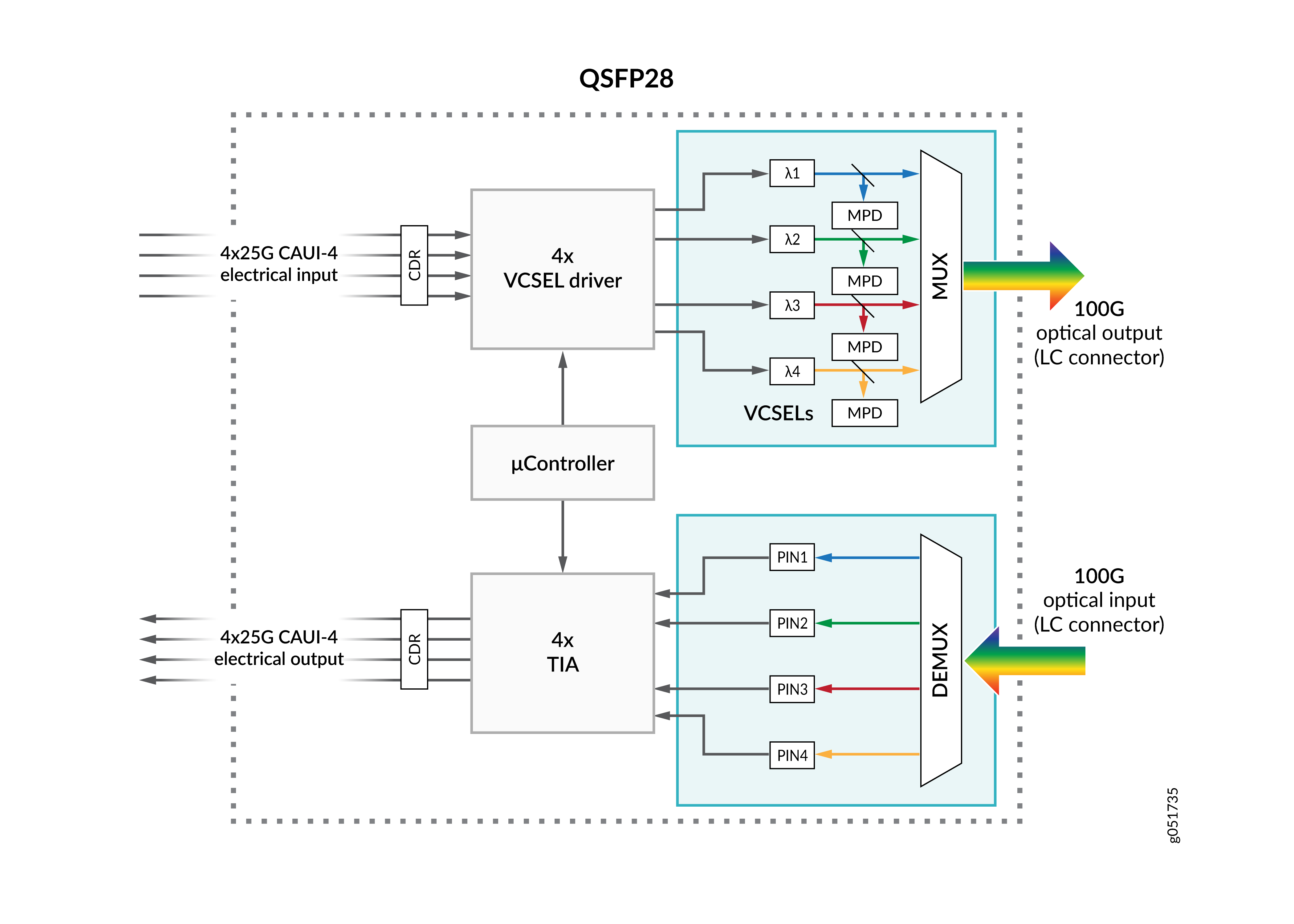
Typical application scenarios include:
In these environments, every component in the signal chain—including connectors—directly affects overall system performance.
At 25 Gb/s per lane, even small signal disruptions can lead to performance degradation. Connectors must ensure:
Poor connector quality can result in:
INGKE provides a range of high-quality connector solutions designed to support modern Ethernet standards, including high-speed applications aligned with IEEE 802.3bm requirements.
Key advantages of INGKE connectors:
While IEEE 802.3bm defines the framework for 100G Ethernet, real-world performance depends heavily on component selection. Choosing reliable connectors is not just a hardware decision—it directly impacts system stability, maintenance costs, and long-term scalability.
IEEE 802.3bm plays a vital role in enabling 100G Ethernet, especially in data-intensive environments like modern data centers. As data rates continue to increase, the importance of high-performance interconnect solutions becomes even more critical.
INGKE’s connector solutions are designed to meet these evolving demands—helping engineers build faster, more reliable, and more efficient network systems.
Name: INGKE TECHNOLOGY
Mobile:86 (755) 3283-5625
Whatsapp:+86 13392431368
Email:info@ingketech.com
Add:No.2106,Sanhe Building,Longgang Zone,Shenzhen City,518116,Guangdong,China